Showing posts with label castle. Show all posts

The Chantilly Castle

Having experienced Lille's braderie in 2010, we decided to escape it this time. Although vintage and antique shopping does hold a particular attraction to us, but the circumstances haven't changed - the kids dislike crowds and shopping. And 2 days of rubbing shoulders (literally!) with millions of people didn't feel appealing to us either as we this week we rented an apartment right in the centre of Braderie. So, we rented an car and drove south to Chantilly.

To call it a castle will not give it enough credit. This is really a land, an estate, an island of peace, serenity, beauty, and... luxury. Nothing I've seen in France so far struck me with such force of its wealth, refinement, confidence, and beauty. Not Versaille, not the Petergoff, not Austrian's Schoenbrun, or any other domain out the dozens I've seen, exhibit such monumental architectural cohesion and leaves such a deep impression. It is imposing and grand without being being overly touristy and fake glamour that inevitably creeps in with it.

The history of the area on the web is sketchy, intertwined with the history of France and in many painful ways is reflective of its history. Although Chantilly estate existed since the mid-Ages, the work on building the estate started in the 15th cc. when it was handed to the house of Montmorecy. Later the estate was inherited by the Great Conde and belonged to the great Prince's family till the Revolution. A huge part of the Chantilly glory belongs to the Duke of Aumale, who inherited the estate from his uncle after the Revolution. Left with no heirs, the Duke of Aumale undertook massive restoration of the property and bequeathed Chantilly to the state of France with a few conditions, namely, public access and daily operation of the property.


A view of the main Chateau

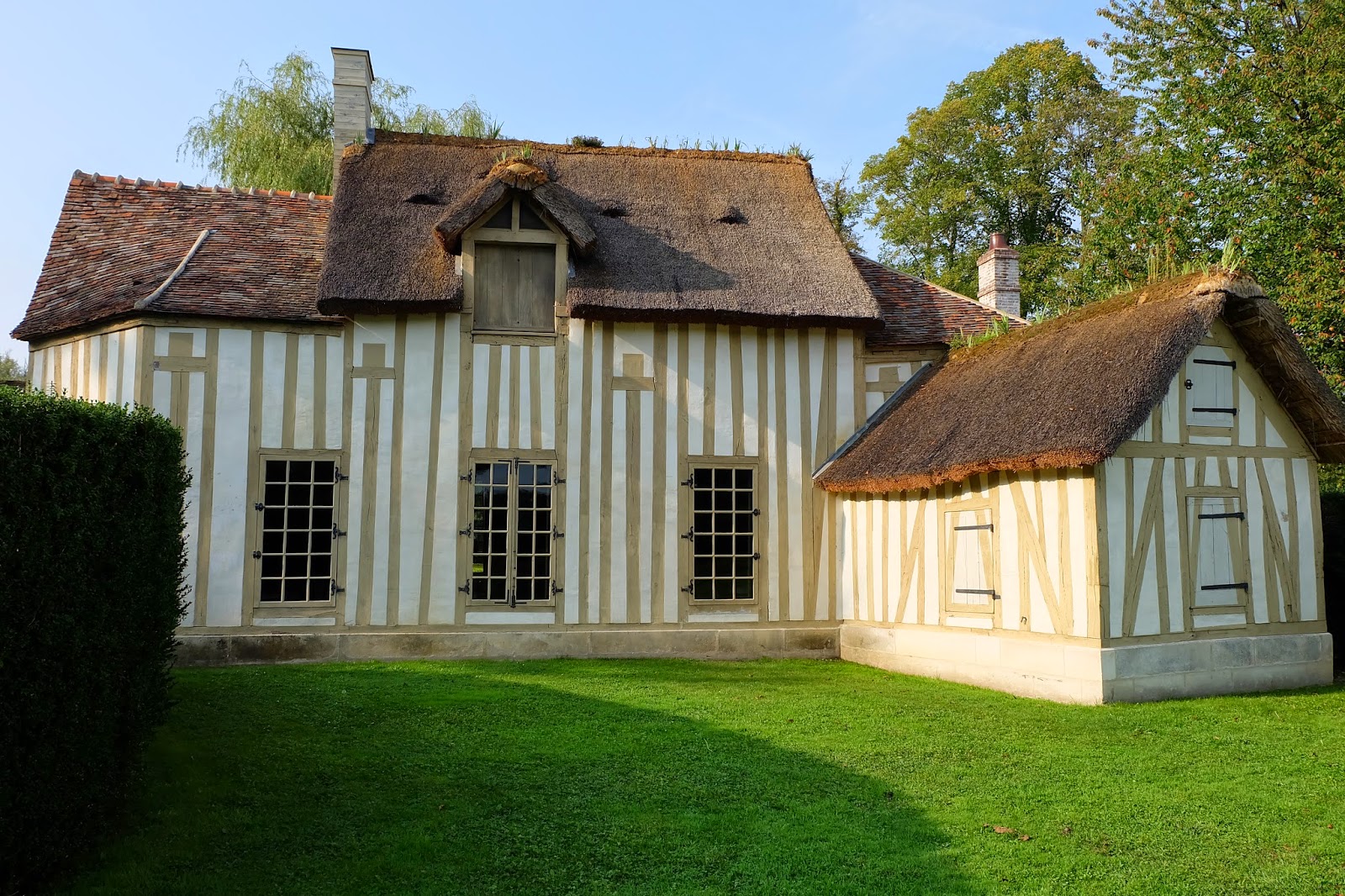
Les Hameaus - a fashion picked up by Marie-Antoinette

The extensive Chantilly Gardens

The Chateau, an inner view


Read more »

Carcassonne, France

The Cite from the bridge
On our way to Carcassonne I heard that it laid in a rather neglected region of France, so it is mostly overlooked by tourists. This or the off-peak season being the reasons, Carcassonne was so comfortably deserted! Alas, for the same reason(s) there were no guided tours and traditional jousting but I know the Big Nomad was happy we missed these typical tourist must-dos!

We spent there a great deal of time at Carcassonne - browsing through the Fortress and the city, having unhurried lunch and breaks, having caught the sunset that made the castle gleam under the light!

Designated as a UNESCO World Heritage Site it is a fortified medieval French town, complete with a Castle, a fortress, a basilica, the ramparts. The hilltop was identified as a strategic location by the Romans and the Colonia Julia Carcase was established here between 43 and 30 B.C. In 462 the Romans officially ceded the western colonies to the Visigoths; he built more fortifications at Carcassonne: traces of them still stand. Saracens from Barcelona took Carcassonne in 725. King Pepin the Short drove them away in 759-60 he was unable to penetrate the impregnable fortress of Carcassonne. 

In 1067 Carcassonne became the property of Count Trencavel through his marriage. Carcassonne became famous in its role in the Albigensian Crusades, when the city was a stronghold of Occitan Cathars. In August 1209 the crusading army of Simon de Montfort forced its citizens to surrender. After capturing Trencavel, imprisoning him and allowing him to die, Montfort made himself the new viscount. He added to the fortifications. Carcassonne became a border citadel between France and the kingdom of Aragon (Spain). The city submitted to the rule of the kingdom of France in 1247, and King Louis IX founded the new part of the town across the river. He and his successor Philip III built the outer ramparts.

In 1659, the Treaty of the Pyrenees transferred the border province of Roussillon to France, and Carcassonne's military significance was reduced. Fortifications were abandoned, and the city became mainly an economic center that concentrated on the woollen textile industry. 

Carcassonne was struck from the roster of official fortifications under Napoleon and the Restoration, and the fortified cité fell into such disrepair that the French government decided that it should be demolished in 1859. The mayor of Carcassonne, Jean-Pierre Cros-Mayrevieille, and the writer Prosper Mérimée, the first inspector of ancient monuments, led a campaign to preserve the fortress as a historical monument. Later in the year the architect Eugène Viollet-le-Duc was commissioned to renovate the place. Carcassonne is agreed to be a work of his genius, though not of strictest authenticity.
Credits: Wikipedia

This is a rare case of pictures being worth a thousand of words...


Read more »

Ghent, Belgium

Graslei - undoubtedly the most beautiful street in Ghent
I had no expectations, no impressions, no emotional attachments as far as our day-trip to Ghent was concerned. Having visited it over the weekend, I cannot relay the amazement at the beauty of the city!

Once again, a less-than-an-hour train ride took us to the Ghent station. After the first unsuccessful attempt to reach the historic centre of the city by a tram in the wrong direction, we entered through a street that opened to a stunning view of the canal and cathedrals' skyline. It did take my breath away!!! While Bruges is celebrated as the gem of medieval Flanders architecture and has an established symbol of the most beautiful Flemish city, Ghent is frequently referred to as 'unsung' and is often overlooked by visitors on their Bruges -> Brussels trips. Maybe exactly for the reason of having no expectations and the town's dazzling personality, I have truly loved Ghent!

The historic centre is very compact and I found it easier to navigate than Bruges. It's not as overwhelming size-wise either, with most sites situated right on the canal or a few side streets -you could probably walk around it in two hours and see all major sights. Somehow, Ghent felt so much bolder and more forward, whereas Bruges was much softer and serene.

The star of Ghent shone brightly in the Middle Ages, when its population reached 65,000 people in 13th c. rivaling Paris only, making it the 2nd biggest town in Europe. Its location on the confluence of two rivers made trade an important part of the economy. The Counts of Flanders made Ghent their residential seat and built a castle there. The next few centuries saw shifting ownership over Ghent (Flemish, French, Spanish) up to the end of the . Today it is a major university centre with 250,000 inhabitants.

We walked the town what would have been quite leisurely had it not been for the oddest weather. On the photo below you will see a bright blue sky with no clouds. This would last for half an hour and it would get so hot and sunny that we'd take off our jackets. All of a sudden it'd start pouring, with heavy torrential-like rain which would stop in 10-15 minutes. After the 7th downpour and 7th desert-like sun, I stopped counting. We just took frequent rain breaks to stop at numerous cafes, chocolate shops, and restaurants to try a new beer (and warm chocolate milk for the Little Nomads made with REAL chocolate!) We skipped a visit to the oldest Brasserie in town with the image of Cambrinus still fresh in mind.
 
Castle of Counts built in 1180 was a seat to the Counts till the 14th c.


The Little Counts of Flandres


The Impression of the Day. Yes, I testify that Belgian mussels are much bigger, more succulent, and definitely tastier than their French counterpart (just like in Texas).
Read more »