Showing posts with label museum. Show all posts

The Chantilly Castle

Having experienced Lille's braderie in 2010, we decided to escape it this time. Although vintage and antique shopping does hold a particular attraction to us, but the circumstances haven't changed - the kids dislike crowds and shopping. And 2 days of rubbing shoulders (literally!) with millions of people didn't feel appealing to us either as we this week we rented an apartment right in the centre of Braderie. So, we rented an car and drove south to Chantilly.

To call it a castle will not give it enough credit. This is really a land, an estate, an island of peace, serenity, beauty, and... luxury. Nothing I've seen in France so far struck me with such force of its wealth, refinement, confidence, and beauty. Not Versaille, not the Petergoff, not Austrian's Schoenbrun, or any other domain out the dozens I've seen, exhibit such monumental architectural cohesion and leaves such a deep impression. It is imposing and grand without being being overly touristy and fake glamour that inevitably creeps in with it.

The history of the area on the web is sketchy, intertwined with the history of France and in many painful ways is reflective of its history. Although Chantilly estate existed since the mid-Ages, the work on building the estate started in the 15th cc. when it was handed to the house of Montmorecy. Later the estate was inherited by the Great Conde and belonged to the great Prince's family till the Revolution. A huge part of the Chantilly glory belongs to the Duke of Aumale, who inherited the estate from his uncle after the Revolution. Left with no heirs, the Duke of Aumale undertook massive restoration of the property and bequeathed Chantilly to the state of France with a few conditions, namely, public access and daily operation of the property.


A view of the main Chateau

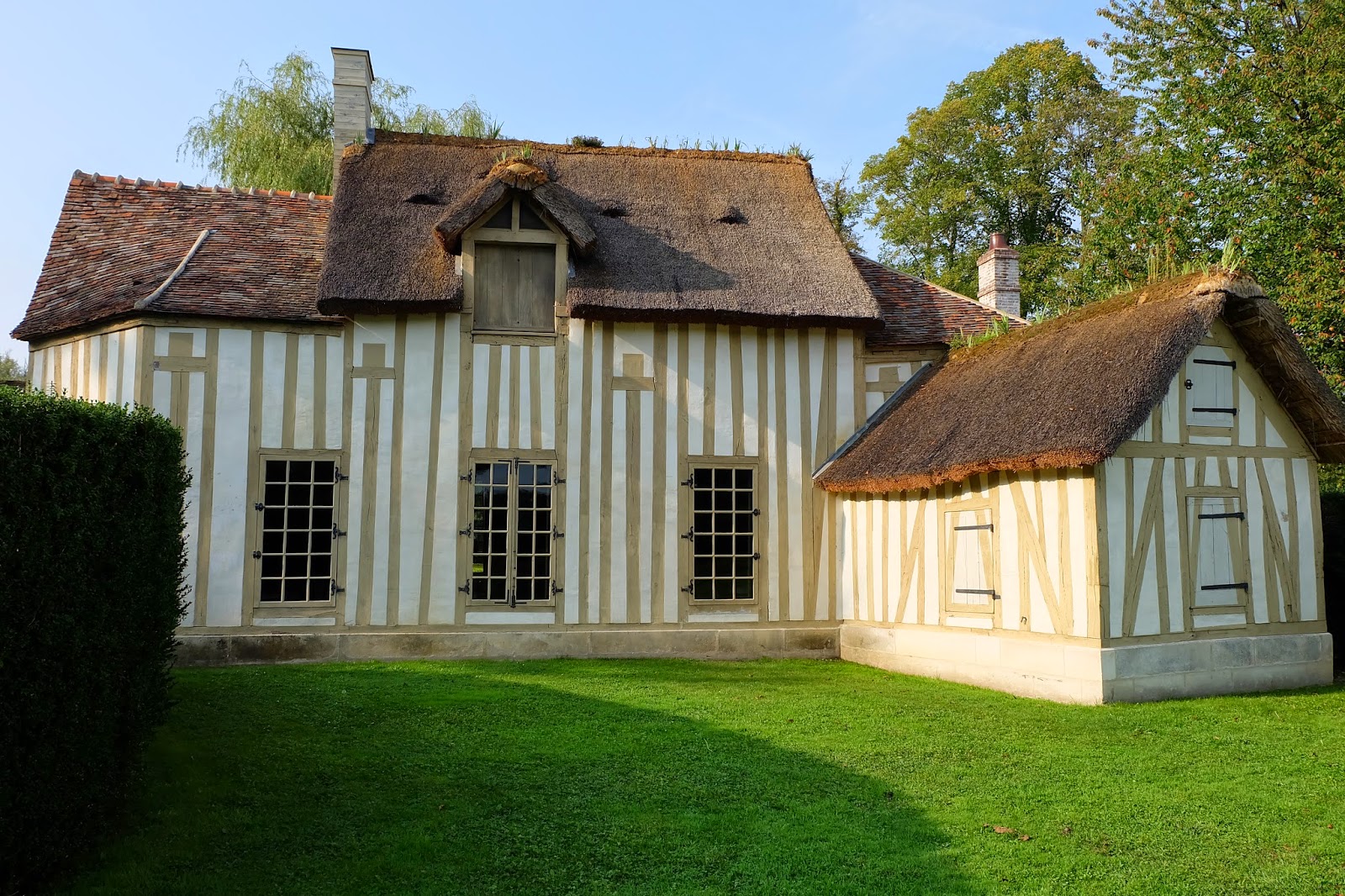
Les Hameaus - a fashion picked up by Marie-Antoinette

The extensive Chantilly Gardens

The Chateau, an inner view


Read more »

The Old World: Cologne

Cologne Dom
Germany has quickly cured any melancholy I felt for the warm sunny Adelaide. Basking in the afternoon sun in a cafe on a cute car-free square in Wuppertal, enjoying my coffee and wholesome German brunch I was reminded why I'm so drawn to Europe.

We spent a couple of days getting over the jet lag, walking and shopping, eating out, relaxing in a hotel sauna and splashing in the jacuzzi. Having got used to Australian food, Germany's menu was refreshingly different. I couldn't remember the last time my schitzel was so incredibly good as this time in April.

Two days of relaxation seemed enough and next day we hopped on a train to Koln (Cologne). The last time I was there was about 10 years ago but I still remembered the beautiful cathedral and the tea cafe at the square. This time around the cathedral seemed even more magestic, glowing in the spring sun; the Gothic detailing - breathtaking. We climbed to the top of the Dome and the Little Nomads counted all 533 steps up and down.

Next we visited Wallraf-Richartz Museum, which is not too far from the Dom. In the city that boasts such an amazing architectural treasure, the museums are often overlooked. I was so surprised to have found this museum! Its collection is extensive but manageable, covering 13-19cc.

Yummy pretzels that you have to try when you are in Koln
Having walked along the Rhone river we headed to the Chocalate Museum sponsored by Lindt. And what a treat it was for the kids!!! 2,5 hours that we had spent there were not long enough for all the things they could and wanted to do. They explored every nook and corner of the 3-floor facility, pressed every button and watched every demo. Finally, we indulged ourselves in the museum's cafe. A Russian-speaking waitress brought us white chocolate for the kids, Aztec coffee for me and Crispy Gold coffee for the Big Nomad. An array of deserts followed.

At least two pounds heavier, tired, but happy (chocoate releases body's happiness hormones) we headed back. The gloomy weather, gusty wind, cold, and drizzle did not seem to be that unpleasant with warm coffee and chocolate warming us from the inside.

Chocolate Art in the Chocolate Museum's cafe


Read more »

Sightseeing in Adelaide (with kids), part 1

Adelaide is a great city to visit with kids - aside from spotless beaches there is just the right combination of kid-focused venues and events reachable by public transportation, both indoor and outdoor: museums, galleries, walks, green spaces and parks. An endless row of festivals, celebrations, and parades gives you a feeling of an eternal holiday!


MUSEUMS

The museum staff member
helps with the microscope
1. South Austalian Museum - a free 4-floor natural history museum on North Terrace has combined rich and concentrated exhibits on huge range of subjects including Australia's history, Aborriginal cultures, animal world, minerals, Arctic expeditions, etc. The hands-on expoloration room and a full-size giant squid were the Nomads' favorite.


2. Migration Museum tells stories of migrants who came to Adelaide from all over the world, from the first English ship in 1836 to the most recent immigrants from Afganistan. Interactive displays, computer screens, personal stories, and hands-on storyboards have made poignant stories of migration interesting and approachable to kids.

The Immigrants sculpture in the courtyard of the Migrants Museum

King Henry VIII by Holbein
is in the museum's
permanent collection
3. Art Gallery of South Australia houses a good collection of art that includes works of Rodin, Van Dyck, Brueghel and Bosch.

We caught two interesting temporary exhibits - The Desert Country, an internationally acclaimed Australian desert painting movement and The Feast of Trimalchio, an avant-garde  large-scale digital video installation of Petronius’s epic poem from the Satyricon for a twenty-first century audience filled with erotic and gastonomic fantasies, created by 6 Russian artists.

A snapshot of The Feast of Trimalchio

The museum draws immense crowds of kids every first Sun of the month for Arts' Kids at the Gallery when it  introduces children to arts, music, and the museum's collection through themed events.

Arts' Kids at the Museum

4. Tandanya Indigenous Cultural Institute presents history and culture of Aboriginal (Kaurna) people of South Australia. A free demonstration of didgeridoo, an aboriginal instrument, was the most interesting part for the kids.

Read more »

Toulouse Impressions, continued

We walked a lot admiring Toulouse, trying to make the most of our few days there. It is a very easy city for walking - no cobblestone which kills high-heels and feet, no intertwined narrow streets, no confusing mazes. The Mediterranean warmth  instilled comfort and some peacefulness, falsely maybe, but nevertheless, it seemed so different from the reserved cool air of Nothern France.  
The food was definitely adding to the serenity factor - the traditional game meat, foie gras, and potatoes washed down with Gaillac or Frontonnais leave body no other choice but to go in a passive-defensive digestive coma.

Most of the architectural sights in Toulouse are either relatively "new", built the 17-18th century or they were built to replace the old structures. So is the case with the striking Capitole in the centre of the city.

La Capitole
The Capitole at night
The Capitole has been a seat of the municipality since the 12C. During frequent absences of the Count, the town councilors assumed a range of powers and oversaw operations of the city. Capitouls were elected for a year and were awarded titles of noblemen with a coats of arms. The regime of capitouls was abolished after the French Revolution.

After the 12-day fire of 1463 most of building was rebuilt. The present Capitole is a mix of styles from the 16C to 19C. The building was closed for a wedding ceremony so we couldn't go inside, but they say the halls are magnificent.

The square in front of the building once drew the border of the Roman town. Although it was created in the early 1800ies, it has immediately become a focal point of Toulouse. A large bronze Occitan cross covers the centre of the square's pavement. Usually empty, 12 balls of the cross are decorated with 12 horoscope signs by Raymond Moretti. He also created 29 coffers on the arcades of the ceiling opposite the Capitole retracing important events and citizens of the city. I only vividly remember the portrait of Ferma who worked in Toulouse.


Musee des Augustins
 The Gargoyle sculptures
Part of the charm of France (beside many other things) is in its creative ability to boldly combine seemingly polar concepts, textures, and materials. This is so well-reflected in their food, fashion style, and architecture. A rare city would dare top the sacred medieval symbol of the city with horoscope signs, plop a bizarre glass pyramid in the middle of the neo-Classical square, install an art museum in a former swimming pool. Exploring every city brings childish excitement of a new discovery that ties the impossible, as is the case with the Musee des Augustins.

Former monastery cloisters
The fine arts museum is housed in a former Augustinian monastery (built around 1310). The religious community was disbanded at the time of the Revolution and the building was used a museum. It is best known for the outstanding collection of Romanesque sculpture taken from the cloisters of Toulouse destroyed during the last century Cloisters, chapels, courtyard are well-used to display the art work and sculptures. The art collection is modest but well-represented to cover periods from Italian primitivists to impressionists. For me the art highlights were La Belle Epoque and neo-classical painters (and yet another death of Marat) and a work of Perugino.
Read more »

Brussels, Belgium - Day 1

The weekend trip to Brussels flew by so quickly that only now, 3 days after the trip, we had time to catch our breath. The city took me by surprise by its dynamic spirit, a mix of youthful energy and historic serenity, a combination of seemingly polar concepts (a monarch country that leads the European Union), and a general sense of spontaneity awaiting around the corner.

Alas, speaking of spontaneity, around the same corner we found crowds of tourists! Maybe it was an usually hot weather or the annual Brussels marathon that drew 7000 runners from 40 different countries, but Brussels was so crowded that the only place I've seen so busy was St. Marco's square in July.

Javier Marin's heads ensemble
on the museum's square
A Euro-star train took us from Lille to Brussels  in 35 minutes and we immediately set on our traditional route: a fine arts museum with a break in a museum's cafe. Brussels is said to be home to 80 museums and the Royal Museum of Fine Arts (Musées royaux des Beaux-Arts de Belgique) combines 4 - The Museum of Antiquity, Fine Arts, Modern Arts, and Rene Magritte Museum. 

There is also a terrific exhibit of Lucas Cranach, which we didn't visit. We assumed it'd be a bit early to expose the Little Nomads to glorious illustrations of human body, as vivid as they are in Cranach's work.

Javier Marin's work seemed to be the accent of the season in Brussels: it was on display throughout the museum and in the city's square presented in various media - resin, plastic, and ... beautiful emerald bugs! The installation of the heads' sculptures on the main square was disarming - the same way the Louvre pyramid amid the classic palace buildings or the head sculpture by St. Eustace in Paris leave you at a loss. I tried to categorize and archive the heads in my brain catalog, but really... I couldn't - they don't fall into any familiar category.
A few days later a friend of mine commented on our trip photos - "The heads are brilliant! Frequently, I feel like this - when my world gets taken over by emotions and I feel like one of those red heads standing upside down." That's a magnificent interpretation!

The highlights of the Fine Arts museum:
- a comprehensive collection of the Flemish School: Bruegel, Bosch, Bouts, van Dyck.
- "Rubens Room", which houses more than 20 paintings by the artist.
- The Death of Marat by Jacques-Louis David.

Atomium
total height: 102m
diameter of the spheres: 18m
Having walked around the centre, we took a bus tour to the other side of town to see Atomium and mini-Europe.

Atomium - a structure, which was built temporarily for the 1958 World-expo, has become a visual symbol of Brussels. It represents an iron crystal, magnified 165 billion times and corresponds to a cube centred on one of its points. Our of its 9 'balls' 5 are open to public and house various expositions. The upper sphere gives you the most beautiful top view of the city.

Mini-Europe - a miniature park represents all European Union countries on a scale of 1:25. Each country has built a pavilion, which is most representative of their nation. 300 models and sites in a quite unequaled craftsmanship were a thrill to the Little Nomads. Most of the sites have interactive features - mechanisms that trigger action and/or music - the Big Ben chimes, Finland has a person jumping into a lake right out of the sauna (wink-wink), Italy - gliding gondoliers, Spain - fighting bulls, etc.

Having walked in the park for a couple hours, we took the HH bus to the centre and had a nice leisurely walk to our hotel.

Mini-Brussels with the Eiffel Tower in the background
A heap of structures at mini-Europe
Information overload
Read more »

Lille's Fine Arts Museum (The Palais des Beaux-Arts de Lille)

The Old Women by Goya
Ever wondered where this surreal Goya's black-period "The Old Women" painting is? It's in Lille's Fine Arts Museum, as well as many other magnificent works - an amazing collection for a city of 1.2 mln!

The Museum is the largest outside Paris and hosts a very decent collection of paintings. Housed in a beautiful belle-epoque palace built in late 19th century specifically for the museum, it overlooks an equally beautiful Place Republique.

The art collection represents a wide panorama of artistic highlights from the 12th to the 20th century. I embody its Gothic collection with a Bosch-like "La chute des réprouvés" (15th cc) by D. Bout. The 16-20th centuries collections are more varied and plentiful, arranged by schools and location. There are a few magnificent works by Rubens and his workshop. The Spaniards are represented by Goya, El Greco, and Ribera; 16th - 18th century Italy: Venice, Tintoretto, Bassano; Romantists represented by Delacroix, Neo-Classisism represented by David, and much, much more!

The antiquity collection was much more fun for the kids - ancient Greece and Egypt, always a hit!

Photo credit: linternaute.com
The Museum's ceiling

The Museum's tiled floor


The reflection of the museum in the back building's windows
Read more »

Muséum National d'Histoire Naturelle

Another Wednesday... I took the Little Nomads to the Muséum national d'Histoire naturelle with a collection, which is "unique in France and includes over 250,000 objects". The collection has certainly outgrown its building - there is an impressive insectarium with species from all over the world, fossilized remnants of prehistoric life, reconstructed dinosaurs, and recreated prehistoric tropical forests.

The museum must have been heaven for a team of taxidermists as both floors are packed with thousands of stuffed species.

The building is located in one of the most picturesque areas of the city with a park, which elicited much more the enthusiasm in the Little Nomads, than the museum itself. They joined a horde of French kids who were tediously working on  knocking nuts off the park's many chestnut trees. We left the park with the Very Little Nomad's pockets stuffed with chestnuts.


Read more »

Paris: Things to Do with Kids

“When good Americans die they go to Paris.”

Oscar Wilde

Since we are Canadians - we are good by definition, hence, we don't need to wait till we die to go to Paris! 

By the Louvre
Traveling without kids tends to leave a touch of hazy sentimental after-taste to any place you visit. I had a certain image of Paris based on my previous trips, not overly romantic, but very pleasant nevertheless. I wondered if this picture of Paris would be completely ruined by the time we get back.  

The trip turned out to be fantastic - quite different from all the other visits, but in a good way: we got to visit places we'd otherwise skip, walked around more rather than stand in line to get into 'hard-to-get-into' places and exhibits, went to restaurants that are laid-back rather than formal. 

Here's are some highlights of the trip:

1. The Louvre  
The line up was very modest and we were inside in less than 10 minutes! We were lucky to have had an hour in the galleries after showing the Little Nomads the famous Mona Lisa, as they were losing their minds amidst thousands of paintings! 
The Ancient Egypt, Ancient Greece, Etruscan, the Napoleon III apartments, the Medieval Louvre exhibits were a big hit! 

2. Playgrounds and Parks
We took long and nice breaks from walking and sight-seeing in Paris' many parks, amusement squares, and playgrounds. The Luxembourg Gardens has an amazing closed-off playground for C2,50 per child! A wonderful fountain with toy boats, puppet theatre performances gave our little guys a chance to recharge their batteries. Other parks we visited: Tulieri, Champ-es-Elysee, St Eustace.

By St Eustace

3. Churches
St Eustace
The solemnity of churches became a welcome change from the museums so much so that by the end of the 1st day, the Little Nomads were screaming "Let's go visit the church!" It's hard not too, as Paris has one too many! A few we visited: 
-Notre Dame Cathedral
-St. Eustace
-St. Germain-des-Pres
-St-Sulpice
-Sainte-Chapelle
Because of the European Heritage weekends all buildings normally closed to public were open. We even caught an organ demonstration and a fringe theatre acrobatics rehearsal at St. Sulpice.


4. The archaeological Crypt of the Parvis de Notre-Dame
A splendidly recreated settlement of the Parisii, the Celtic tribe that first settled on the site of Paris 2000 years ago, from which the city takes its name. The Little Nomads had fun running around the gloomy crypt with dark paths, pressing buttons that illuminate certain parts of the excavation (I'm not sure the staff were equally excited though!)


5. Centre Pompidou and the neigborhood
The colorful centre, the Stravinsky fountain, and the square filled with street performers was a great entertainment to the kids.

Chasing giant bubbles at Centre Pompidou


6. The Eiffel Tower
The shadow of the Eiffel tower
The tickets purchased online saved us what looked like hours of waiting in line. We got through the reserved line and were at the top in less than 15 minutes!

7. Hop on - hop off boat tour 
Not only does a boat tour give you a different perspective of the city, but it also lets you avoid the hordes of tourists on Paris streets. The number of times you can get on the bus is not limited so essentially, we used it to get from one place to another and also, gave the Little Nomads a break from walking. 

8. Fountains and Monuments


9. Dining
  

Having started to look around for a place to eat on Sunday evening, we realized that the only restaurants open were Asian. This did not entice us too much and we kept walking till we hit to a little pocket on Montmarte with a row of restaurants, which housed a French crowd. We found one that looked more democratic and settled for what turned out to be a very nice dinner at Le Tambour, which specializes in no-nonsense "urban rustic" cuisine.
The Impression of the Day. Who said the Parisians were rude?
A very lovely friendly bunch! Hope not in the National Lampoon's way:

Read more »